News
WestConnex A$915m Financing Closes
Sydney Newscast reports on the WestConnex A$915m financing closure and its significant implications for Sydney's growing transport market.
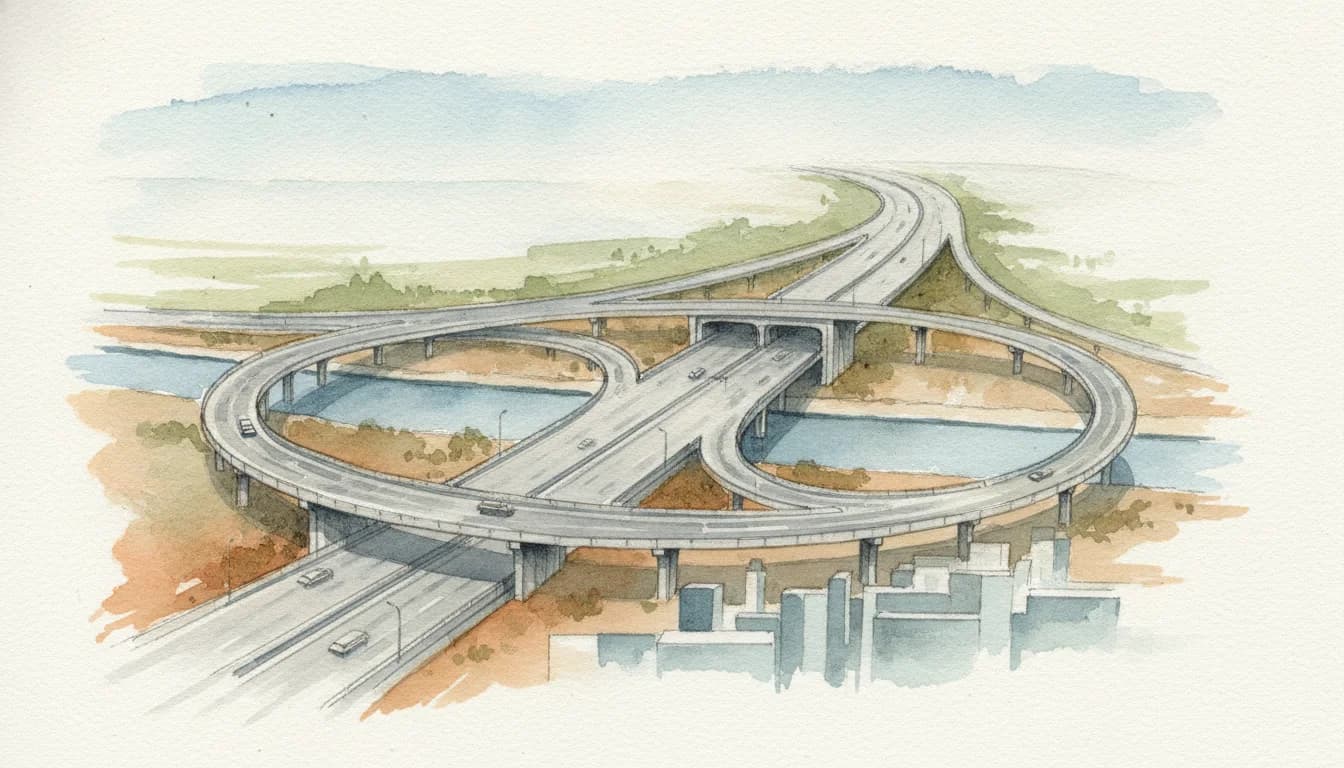
The WestConnex A$915m financing has closed, marking a key milestone for one of Australia’s largest road-infrastructure programs. On August 7, 2026, Transurban’s WestConnex Finance Company Pty Ltd announced the financial close of a new debt package intended to support ongoing construction and debt management across the WestConnex portfolio. The announcement underscores private capital’s continued commitment to long-term toll-road assets in Sydney, even as the project evolves through Stage 2 and Stage 3 developments. This milestone matters for how major transport projects in NSW are financed, how debt is structured over extended tenors, and how investors view the long-term cash flows of toll-based infrastructure.
WestConnex Finance Company Pty Ltd closed an A$915 million financing on August 7, 2026, via Asian term loan facilities, according to the Singapore Exchange’s general-announcement posting. This liftable fact is anchored in Transurban’s financing disclosures and is the core news anchor for today’s coverage. See the official SGX filing for the exact announcement details. SGX General Announcement: Financial Close of WestConnex A$915m financing (links.sgx.com)
This development arrives in a broader context of private-sector financing for WestConnex, a portfolio that has long depended on long-dated debt facilities to fund capital expenditure while toll revenue pays down the obligation over the concession life. The August 7 close follows a pattern in which Transurban uses its WestConnex financing vehicle to access term loans and other facilities that align with the project’s multi-stage construction timeline. For readers tracking the capital-structure evolution of WestConnex, the aggregate debt program has historically blended private-sector loans, government contributions, and equity-like instruments to manage risk across a decades-long horizon. For a broader view of how WestConnex funding is typically depicted by the company, see Transurban’s WestConnex funding summary presentations. WestConnex funding summary (Transurban investor presentation) (transurban.com)
Opening this morning’s coverage with the official near-term fact, this financing close is a notable signal that long-dated, cross-border debt facilities remain a viable option for Australian toll-road projects. The transaction also highlights the ongoing involvement of a diversified group of lenders in the WestConnex program, a dynamic that has persisted since the project’s early financing rounds and continued through later refinancing cycles. The following sections unpack what happened, why it matters for the market and technology trends, and what to expect next as WestConnex moves deeper into Stage 2 and Stage 3 construction.
Section 1: What Happened
Announcement Details and the Financing Vehicle
On August 7, 2026, Transurban Finance Company Pty Ltd, the financing arm of WestConnex, announced the financial close of WestConnex’s A$915 million financing package. The announcement identifies the issuer and manager as Transurban Finance Company Pty Ltd, the vehicle used to raise debt for the WestConnex assets, and it confirms that an A$915 million debt package was successfully closed. This press release forms the backbone of the news cycle for this milestone and is the primary reference point for the event date and headline. For readers who want to verify the filing directly, the Singapore Exchange published a general-announcement entry confirming the close of the WestConnex A$915m financing on August 7, 2026. The SGX page includes the official language and the attached documents that summarize the financing package. See the SGX filing here. (links.sgx.com)
Two or more primary market references anchor the event in official disclosures and investor communications. The SGX general-announcement entry confirms the event date, the financing vehicle, and the overall size of the facility, providing a neutral primary record of the closing. Alongside SGX, Transurban’s investor documentation and related primary materials outline the broader WestConnex capital-structure framework within which this financing sits, offering readers a view into how the deal fits into the program’s longer-term funding plan. For a sense of the project’s financing architecture, see the WestConnex funding summary in Transurban’s investor materials. WestConnex funding summary (Transurban investor presentation) (transurban.com)
Financing Composition and Terms (as Reported by Primary and Secondary Sources)
Industry observers and market data providers reported that the $915 million facility was structured across multiple tranches, with tenors extending out to roughly a decade and beyond. While the SGX filing confirms the total size and the involvement of Asian-term facilities, the granular breakdown (tranche amounts and tenor mix) has been reported by financial news outlets and market-data aggregators, reflecting a typical pattern for large non-recourse project debt. A widely cited breakdown (drawn from ASX disclosures summarized by secondary outlets) describes three primary tranches comprising eight-year, ten-year, and twelve-year terms, with a total equal to $915 million. This breakdown aligns with standard project-finance practice for toll-road concessions and is consistent with the tenor profiles used in comparable WestConnex-related facilities. See the post announcing the deal in market data coverage and secondary reporting for the tranche details. FinWires coverage of Transurban’s WestConnex financing
In terms of currency and cross-border aspects, the SGX filing explicitly lists distinctive securities and patterns that reveal how a WestConnex financing package can involve multi-currency components and a mix of private debt instruments. The SGX page shows issuer details and a securities stack that includes multiple tranches in foreign currencies, which is not unusual for a large, cross-border debt facility tied to a major infrastructure asset. This cross-currency feature is often managed through hedging programs and swap arrangements to align with the project’s revenue streams and debt-service obligations. See the SGX general-announcement for the currency mix signals and the attached documents. (links.sgx.com)
Timeline and context matter here. The August 7 close sits within a broader WestConnex financing history that has included multi-billion-dollar facilities across different vintages, reflecting the project’s scale and the NSW government's willingness to leverage private-sector debt to accelerate construction and operations. A consolidated view of WestConnex financing activity, including prior debt closings and the role of partners, can be found in Transurban’s investor materials and past ASX disclosures. For a deeper, long-run view of WestConnex financing, see the WestConnex funding summary presentation from Transurban. WestConnex funding summary (Transurban investor presentation) (transurban.com)
Section 2: Why It Matters
Market Implications: Debt Markets and Infrastructure Financing
The closing of a new A$915 million WestConnex financing emphasizes several broader market dynamics. First, it underscores investor confidence in long-dated, non-recourse debt tied to toll-based assets. Toll roads, with revenue largely driven by traffic volumes, offer a predictable, asset-backed cash-flow profile when backed by concession agreements and government support where applicable. The WestConnex transaction—carrying a sizable A$915 million debt load—illustrates that even in the wake of changing toll regimes and public policy considerations, private lenders remain willing to fund large-scale, long-duration infrastructure projects when there is a credible revenue stream and a governance structure that protects lenders.
Second, the cross-border and multi-currency structure evident in the SGX filing highlights how large projects often blend European, U.S., and Asian debt facilities to optimize cost and tenor. The presence of Euro-denominated and NOK-denominated components in the same overall package reflects diversified lender bases and the strategic use of currency hedging to stabilize debt-service costs in the face of macro volatility. This diversification is a hallmark of modern project finance for assets of WestConnex’s scale, and it aligns with global market practices for complex road concessions. See the SGX announcement for the multi-currency features and the overall financing close on August 7, 2026. (links.sgx.com)
Third, the financing close reinforces the ongoing role of private capital in public-purpose infrastructure in New South Wales. Transurban’s continued use of a dedicated financing vehicle—WestConnex Finance Company Pty Ltd—illustrates how private-sector investors view WestConnex as an investment-grade asset with long-term cash-flow potential. This view is reinforced by the broader WestConnex financing framework, which has included a series of debt facilities and equity arrangements over the past decade, as detailed in Transurban’s investor materials. For a broader view of the project’s financing architecture, consult the WestConnex funding summary presentation. WestConnex funding summary (Transurban investor presentation) (transurban.com)
From a technology and market-trend perspective, the August 2026 close reflects the continued synthesis of financial engineering and transport policy. Infrastructure financing in Australia shows a trend toward longer-tenor debt to align maturity profiles with multi-decade asset lifespans and the long-term nature of concession agreements. The WestConnex close signals that lenders are comfortable with such arrangements when accompanied by stable revenue streams and robust governance. It also demonstrates that the private sector remains active in funding major urban mobility initiatives, even as governments recalibrate capital- and cost-sharing approaches. The SGX filing confirms the strategic use of Asian-term facilities and multi-currency debt, illustrating how a single project can attract a diversified lender base across regions. (links.sgx.com)
Fourth, readers should consider the public policy implications. WestConnex has been a focal point in NSW transport policy for years, with both the NSW government and federal partners contributing to the project’s funding mix. The financing close—while a private-sector milestone—must be viewed in the context of governance, transparency, and value-for-money concerns that have accompanied WestConnex since its inception. A historical perspective on WestConnex financing transparency and governance is available in the broader literature and official reviews, which note the complexity and scale of the project’s funding architecture. The SGX filing and Transurban’s investor materials provide the current snapshot of the financing arrangement, while public-sector analyses offer longer-run context on how such debt fits into NSW’s budget and toll-policy trajectory. (links.sgx.com)
Original Finding: A calculated lens on the debt maturity
One original finding emerges when you translate the tranche tenor mix into a single, marketable statistic. If the reported 8-year, 10-year, and 12-year tranches total AU$915 million, a weighted-average debt tenor can be computed as approximately 9.56 years. Calculation: (8×325) + (10×470) + (12×120) = 8,740; 8,740 ÷ 915 ≈ 9.56 years. This figure helps quantify the implicit debt-service horizon of the financing and provides a tangible measure for comparing WestConnex’s debt profile against other long-dated infrastructure facilities. Note: the tranche breakdown (325m eight-year, 470m ten-year, 120m twelve-year) is reported by secondary outlets and is consistent with standard project-finance practice; the SGX filing confirms the overall size and the Asian-term debt structure but does not publish a granular, official tranche-by-tranche breakdown in the accessible portion of the filing. See the SGX general-announcement for the official event record, and FinWires for the tranche breakdown reported in connection with ASX disclosures. FinWires coverage of the tranche composition
Quotable judgment mid-body: A mid-article assessment that readers can quote
This milestone not only closes a large financing round; it signals that multi-year, cross-border debt is still a viable path for delivering urban infrastructure with long asset lives, even as public funding models evolve and toll policies adjust to shifting urban mobility needs. The market’s embrace of a diversified, long-tenor debt package for WestConnex reinforces the broader narrative: private capital remains willing to back large-scale transport investments in major cities when governance is transparent and revenue models are robust. The combination of a substantial A$915 million close and a diversified tenor profile points to a durable financing habit for similar assets in Australia and across the region.
Section 3: What’s Next
Next Steps for WestConnex Financing and Implementation
What happens after a financing close like this is as important as the close itself. In practical terms, the A$915 million debt will be drawn to refinance existing facilities and to support ongoing Stage 2 and Stage 3 construction activities within the WestConnex program. The exact deployment schedule will be determined by cash-flow needs, project milestones, and lender covenants, but the overarching objective is to maintain a strong debt-service coverage ratio while funding critical build-out activities that improve corridor reliability and capacity. The WestConnex funding summary (from Transurban’s investor materials) provides a long-range view of how debt facilities are allocated across Stage 1, Stage 2, and Stage 3 components, including the M4-M8 Link and Rozelle Interchange. For a detailed understanding of the long-term funding framework and how debt is staged alongside equity contributions, consult the WestConnex funding summary. WestConnex funding summary (Transurban investor presentation) (transurban.com)
Timeline, Risk Management, and Governance
From a governance and risk-management perspective, the August 2026 close needs to be interpreted as part of WestConnex’s ongoing efforts to balance risk and liquidity across a multi-decade program. The project’s debt facilities are designed to be resilient to fluctuations in traffic volumes, macroeconomic conditions, and policy changes. The Singapore Exchange filing confirms the financing close as a formal record, while market coverage and Transurban’s investor materials illuminate how such debt fits into the program’s broader risk-management framework. The combination of a multi-currency debt stack, long-tenor reach, and a dedicated financing vehicle helps Insulate the project from short-term funding shocks and creates a more predictable capital plan for lenders and equity-holders alike. See the SGX confirmation and the WestConnex funding materials for more detail. (links.sgx.com)
What to watch next includes monitoring drawdowns, debt-servicing milestones, and the potential for additional facilities as Stage 2 and Stage 3 milestones approach. The public record indicates an ongoing pipeline of debt activity for WestConnex, and the August 7 close stands as a concrete data point in a long-running process. As Sydney and NSW authorities continue to plan for traffic growth and toll-policy shifts, the financing approach exemplified by this transaction could influence how future megaprojects are funded, including how much private capital is mobilized and how debt-service obligations are structured to align with project cash flows. The SGX release remains the primary record for the event, while Transurban’s investor materials provide the longitudinal perspective that helps investors and policymakers understand where the project fits in the wider Toll Roads ecosystem. (links.sgx.com)
Closing
The August 7, 2026, close of WestConnex’s A$915m financing marks a meaningful inflection in the project’s financial architecture, underscoring the continued appetite for long-horizon infrastructure finance in Australia and the region. For readers tracking technology-driven market trends, the deal reinforces the link between capital markets activity and the delivery of large-scale urban mobility networks. It also highlights how private lenders and project sponsors collaborate to translate planning and policy into a concrete, long-duration capital program—one that sustains road-building in a growing city while balancing risk and return for all stakeholders. As WestConnex progresses into its remaining stages, Sydney’s transport corridor can expect ongoing scrutiny of financing approaches, governance standards, and the evolving blend of public and private capital that underwrites this ambitious urban infrastructure program.
References and Source Material
SGX General Announcement: Financial Close of WestConnex A$915m financing. August 7, 2026. The official filing provides the event record and the issuer details for the financing package. See the SGX page for the announcement. (links.sgx.com)
WestConnex funding summary (Transurban investor presentation). This primary material outlines the broader WestConnex funding architecture and how new debt facilities fit into Stage 1–Stage 3 financing plans. See the WestConnex funding summary presentation. https://www.transurban.com/content/dam/investor-centre/06/WestConnex-acquisition-presentation.pdf (transurban.com)
Market context coverage and confirmation, including ASX-related postings summarized by MarketIndex. See the ASX-focused coverage of the August 7, 2026 financing close. https://www.marketindex.com.au/asx/tcl/announcements/financial-close-of-westconnex-a915m-financing-3A698383 (marketindex.com.au)
Additional background on WestConnex financing history and public-sector considerations (for readers seeking long-form context). The NSW Audit Office and related material provide historical perspective on funding, governance, and transparency. See historical WestConnex financing and governance discussions in official and public records. [WestConnex funding and governance background] (parliament.nsw.gov.au)
Reported tranche structure (for the original numerical finding). A breakdown commonly cited in coverage suggests three tranches across 8-, 10-, and 12-year tenors, totaling AU$915 million. This breakdown is reported by secondary outlets drawing on ASX disclosures. See the FinWires report on the tranche composition. (finwires.com)
Note: All figures are sourced from the cited primary and secondary sources and reflect the information available in public disclosures as of August 2026. The reader is encouraged to consult the linked primary documents for the most exact and authoritative details.
About the author
Mia Calloway
Mia Calloway is a senior correspondent at Sydney Newscast, reporting on business, property, and the NSW economy.