Cost of Living
Cost of Living in Sydney 2026: Rent, Transport, Groceries
What Sydney really costs in 2026: record $800 weekly house rents, the $50 Opal cap, grocery inflation and a realistic monthly budget.
Every conversation about money in Sydney eventually arrives at the same place. Not the price of coffee, which is fine, or petrol, which is annoying but survivable. It arrives at housing. Housing, not lattes, is what makes Sydney expensive; solve the rent and the rest of the city is surprisingly manageable. Here is what the main line items actually cost in 2026, with real numbers rather than vibes.
Rent: the big one
Sydney house rents held at a record $800 a week in the March 2026 quarter, according to Domain's rental report, with unit rents steady at their own record of $750. The small mercy is the word "held". After two years of relentless quarterly increases, both figures have now been flat for consecutive quarters, the first genuine pause since the post-pandemic squeeze began.
Do not mistake a plateau for relief, though. The vacancy rate tightened to a record low of 0.8 per cent in March, which means the market is calm only in the sense that a fully booked hotel is calm. Landlords are not cutting rents; they simply cannot push them much further against stretched incomes.
What you actually pay depends on distance and compromise. Those medians are city-wide. A room in a shared inner-west terrace still comes in around $350 to $450 a week. Head to the outer west or south-west and whole units dip well under the median. The traditional Sydney trade remains in force: every railway station further from the CBD buys you cheaper rent and costs you minutes of your life.
Transport: capped, and genuinely fair value
Sydney's public transport is one of the few line items where the city undercharges relative to its reputation. Everything runs on Opal, either the card or any contactless bank card, and the caps do the budgeting for you. The adult weekly cap is $50, unchanged even as individual fares rose about 3 per cent in the July 2025 adjustment set by IPART, the state's pricing regulator. Hit $50 by Thursday and every train, metro, bus, ferry and light rail trip for the rest of the week is free.
There is also a daily cap, higher on weekdays than on weekends, and half-price travel on Friday through Sunday under the weekend settings, which makes the Manly ferry one of the cheapest great harbour experiences on earth. A commuter travelling five days a week is looking at roughly $200 a month, tops. Compare that with London or New York and Sydney looks almost apologetic.
Driving is another story. Sydney's toll network is extensive and unsentimental, and a daily commute across the harbour or along WestConnex can add thousands a year. Plenty of households in the middle ring keep one car instead of two for exactly this reason.
Groceries: creeping, not leaping
Food inflation has cooled from its 2023 peaks but never quite stopped. The Australian Bureau of Statistics recorded food and non-alcoholic beverage prices rising 3.1 per cent in the twelve months to February 2026, with dairy, bread and pantry staples doing most of the pushing.
In practice, a single person shopping at Coles or Woolworths without much discipline lands somewhere around $100 to $150 a week. A couple or small household typically runs $180 or more. The levers that matter are the unglamorous ones. Aldi consistently beats the big two on staples. Sydney's suburban grocers are a genuine advantage too: the Vietnamese grocers of Cabramatta and Marrickville, the Indian supermarkets of Harris Park and the fish markets at Pyrmont will all beat the majors on fresh food if you are willing to make a second stop. Eating out is where budgets quietly die, with a basic pub main now commonly north of $30.
Utilities and the rest
Power bills bounce with the seasons. Most households pay somewhere in the range of $100 to $250 a month for electricity depending on the size of the home and how hard the air conditioning works in summer, with gas and water on top for those who have them. Internet adds $80 to $110 for a decent NBN plan. Health insurance, childcare and private school fees are the wildcards that separate a comfortable Sydney budget from a strained one, and they vary too much by circumstance to average honestly.
What it adds up to
A single person renting a one-bedroom unit near a train line, using public transport and cooking most meals can live reasonably in Sydney on roughly $4,000 to $4,500 a month, with rent swallowing half of it. A household of four needs meaningfully more, and the difference is almost entirely housing and childcare.
The judgment worth carrying out of all this is simple. Sydney is not uniformly expensive; it is one catastrophic cost surrounded by ordinary ones. Transport is cheap by global standards, groceries are middling, and beaches, harbours and national parks charge nothing at all. Win the housing battle, whether by sharing, moving one suburb further out, or timing a lease renewal into this rare flat patch, and the city becomes surprisingly liveable on an ordinary income. Lose it, and no amount of skipped coffees will save you.
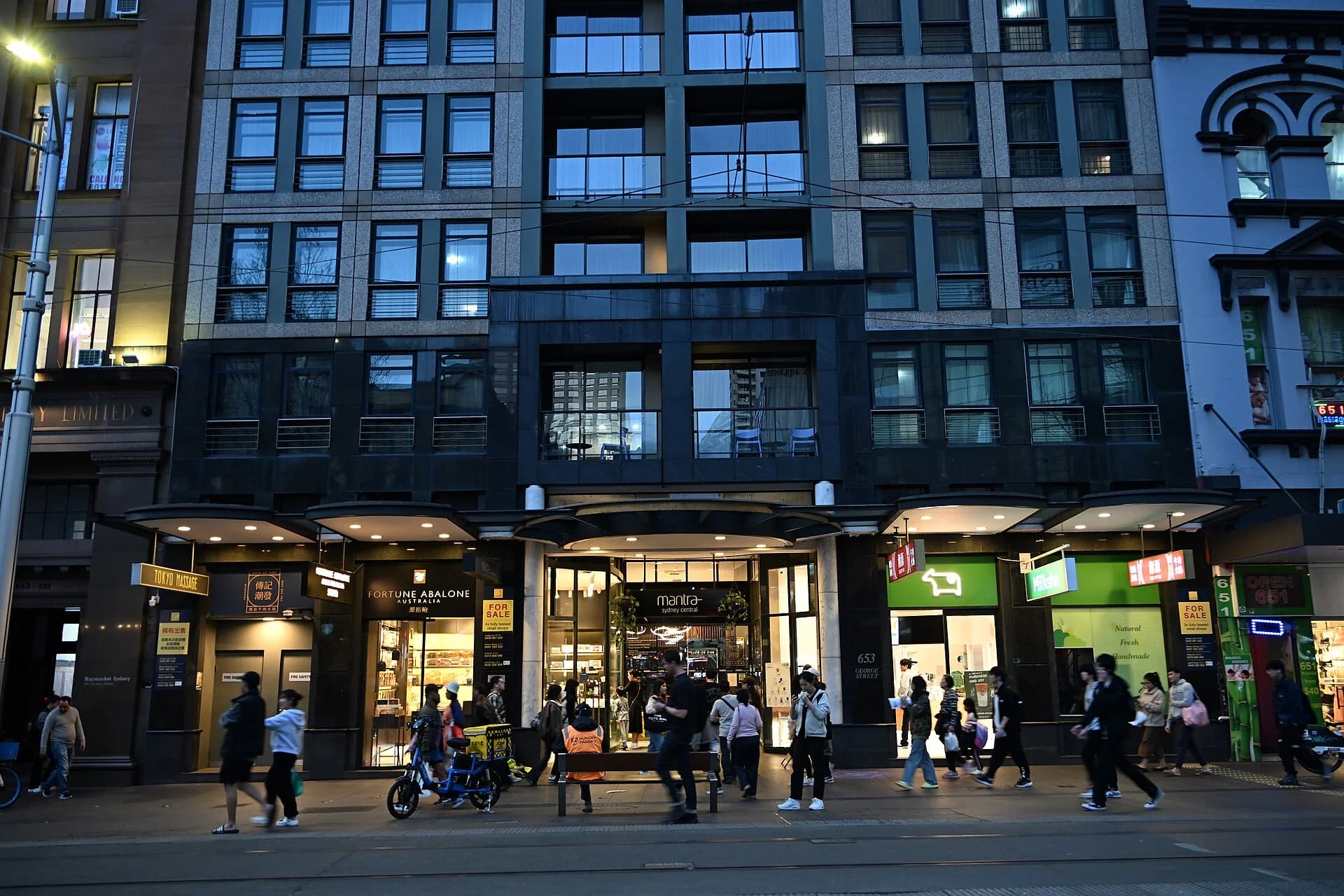
Cover image: Sardaka, cc0 via Wikimedia Commons.
About the author
Duncan Hale
Duncan Hale is the news director at Sydney Newscast, leading coverage of Sydney and New South Wales.