News
Gold Medal Metro Station Contract Awarded
Sydney Newscast reports on the Gold Medal Metro Station contract award, detailing its major implications for the future of Sydney's transport system.
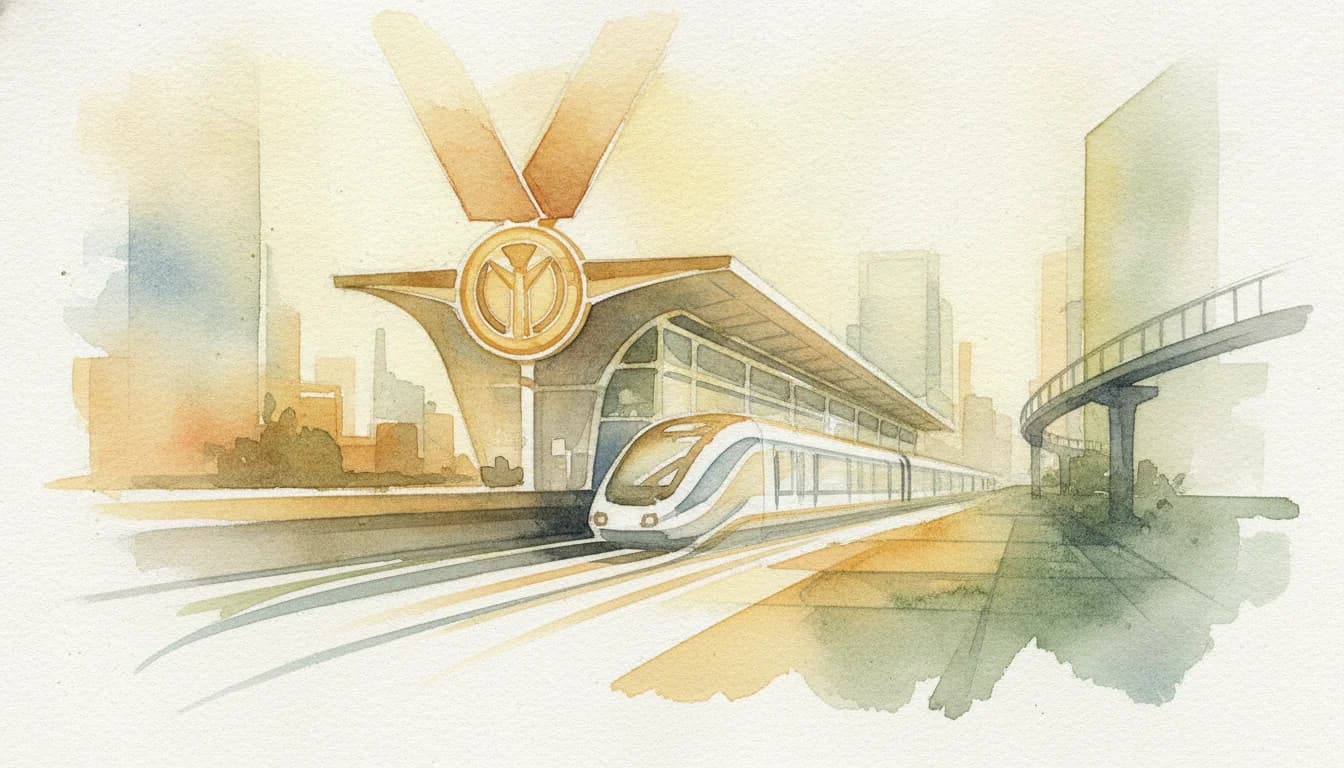
The Gold Medal Metro Station marks a new milestone for Sydney’s Metro West corridor, with the NSW Government announcing the award of the Integrated Station Development Precinct contract on 11 September 2026. This development positions Sydney Olympic Park as a central node in a broader push to expand rail capacity, enliven a major events precinct, and accelerate housing delivery around high-frequency transport hubs. The news comes at a moment when Sydney’s transport planning is increasingly data-driven and outcome-focused, balancing mobility gains with community development and environmental considerations. For readers following technology-enabled transit design and market trends, the Gold Medal Metro Station provides a high-visibility case study in public-private collaboration, urban regeneration, and the economics of large-scale rail-enabled precincts. The opening details below summarize what happened, why it matters, and what comes next, with a data-driven lens that readers of Sydney Newscast expect from a neutral, analytic outlet.
On 11 September 2026, the NSW Government announced that FCC Construction Australia and Ecove Group had been selected to deliver the Sydney Olympic Park Integrated Station Development Precinct, including the new Gold Medal Metro Station and surrounding public realm. The government emphasized a four-platform station configuration designed to optimize crowd movement for major events, with an event-focused mode intended to manage surges in demand during concerts, games, and other big gatherings. The package aims to integrate transport, housing, and public spaces, knitting the precinct more tightly into Sydney’s southwest growth spine. The ministerial release highlighted anticipated performance metrics and timelines, providing readers with a concrete sense of scope and schedule. This is a pivotal moment for Sydney Metro West, as it marks a concrete step in moving from planning to construction for one of the network’s most transformative precincts. According to the NSW Government ministerial release, the project envisions a capacity of roughly 25,000 passengers per hour in event mode, expanding the region’s ability to move large crowds efficiently without compromising overall service levels. The same release notes a baseline capacity of 40,000 passengers per hour for the adjacent heavy-rail approach at Olympic Park, framing the new station as a complementary, event-responsive layer atop existing capacity. For analysts tracking capacity planning and throughput engineering in modern metro systems, these figures offer a precise anchor for evaluating the station’s role within Sydney’s evolving transit mix. (Sources: NSW Government ministerial release, FCC Construction Australia press materials) (nsw.gov.au)
Section 1: What Happened
Contract Award Details
The central event occurred on 11 September 2026, when the NSW Government announced the award of the Sydney Olympic Park Integrated Station Development Precinct (ISDP) contract to FCC Construction Australia in partnership with Ecove Group. The release describes a comprehensive package that includes not only the metro station itself but also the surrounding public domain and adjacent developments, signaling an integrated approach to transport-oriented urban renewal. The four-platform configuration is presented as a deliberate design choice to support event-mode operations, a feature intended to increase the precinct’s ability to channel large crowds efficiently without disrupting regular service. The formal announcement frames the ISDP as a catalyst for a broader transformation of the Sydney Olympic Park area, aligning transport infrastructure with housing and commercial development to support a denser, more vibrant, and safer urban core. The party-line language from the ministerial release emphasizes the multiplicative effects of such a project: improved mobility, enhanced public spaces, and a strengthened capacity to host major events while sustaining long-term urban growth. The government’s choice of contractor—FCC Construction Australia and Ecove Group—reflects a preference for a consortium with a track record in delivering complex, multi-use precincts that combine rail works with urban redevelopment. (Source: NSW Government ministerial release) (nsw.gov.au)
Project Scope and Design Intent
The ISDP package centers on delivering a new Sydney Olympic Park Metro Station, designed to function as a civic and economic anchor for the precinct. The government’s outline describes a station that not only serves as a transit node but also anchors a lively district featuring shops, offices, and housing. The plan calls for a prominent public plaza and two residential towers flanking the station, with a total of around 500 new apartments in two towers of 42 and 32 storeys. The project’s design intent emphasizes a connection to the site’s Olympic heritage and its mangrove landscapes, with materials and lighting intended to evoke the cauldron and natural surrounds. The government release highlights a distinctive station layout described as side-island-side, enabling flexible operation with four platforms and extra escalators to move crowds efficiently. Construction is expected to begin around mid-2027, with project milestones aligned to the broader Sydney Metro West program and stepping stones for a longer-term opening target in the early 2030s. (Source: NSW Government ministerial release) (nsw.gov.au)
Timeline and Milestones
- Award announcement: 11 September 2026. The ISDP contract for Sydney Olympic Park, including the Gold Medal Metro Station, is awarded to FCC Construction Australia and Ecove Group. The release positions the ISDP as a catalyst for a broader precinct, integrating transport with housing and public realm. (Source: NSW Government ministerial release) (nsw.gov.au)
- Construction start window: mid-2027. The government indicates that station construction is expected to commence around mid-2027, a timeline that hinges on final development approvals and detailed design work. (Source: NSW Government ministerial release) (nsw.gov.au)
- Operational targets: Sydney Metro West’s overall opening date remains 2032, with the Olympic Park segment expected to contribute to that network timeline. The ISDP release notes the broader Metro West context and its opening horizon. (Source: NSW Government ministerial release) (nsw.gov.au)
Authorities further underscored that the ISDP involves not just a single station but a connected precinct, featuring the public domain, residential towers, and commercial components designed to maximize walkability and multimodal access. The Department of Transport’s materials emphasize the technical ambition behind the project—the creation of an event-responsive station capable of handling concentrated flows during large-scale events while maintaining service quality during normal operations. The FCC Construction Australia materials released alongside the NSW government materials reiterate the partner’s role in delivering the station and carrying the project through design, construction, testing, and commissioning phases, indicating a tightly managed, lifecycle approach to project delivery. (Sources: FCC press materials; NSW Government ministerial release) (fccco.com)
Related Context: Broader Metro West Injections
Placed within the wider Metro West program, the ISDP’s trajectory reflects a deliberate strategy to leverage rail investments into mixed-use districts. Sydney Metro has publicly signaled that the remaining station contracts for Westmead, North Strathfield, Burwood North, Five Dock, and The Bays would be announced in 2026, signaling a staged approach to delivering the network’s western extension. The award to FCC/Ecove for Sydney Olympic Park sits alongside these other development activities as part of an integrated growth pattern for Sydney’s western corridor. (Source: Sydney Metro contract-signing and planning communications) (sydneymetro.info)
Section 2: Why It Matters
Transportation Capacity and Event Management
The Gold Medal Metro Station is positioned as a centerpiece in Sydney’s event-driven mobility framework. The ministerial release notes a four-platform configuration designed to activate “event mode,” with the goal of moving large volumes of people efficiently during stadium events, concerts, and other major gatherings. The plan cites a potential throughput of around 25,000 passengers per hour in event mode, a figure contextualized by the existing Olympic Park heavy rail capacity of 40,000 passengers per hour. In practical terms, the new station is intended to enable smoother crowd management during peak demand, reducing congestion on neighboring modes and improving overall reliability for fans and attendees. This event-focused capacity planning aligns with modern transit design principles that separate routine flows from surge conditions, allowing for better service regularity during off-peak periods and more predictable flow management during events. For readers evaluating the economics of transit-driven district growth, the event-mode concept is a salient example of how operators forecast peak-period performance without expanding baseline daily loads. (Sources: NSW Government ministerial release; project briefings) (nsw.gov.au)
Housing, Urban Regeneration, and Economic Impacts
Beyond mobility, the ISDP expands the scale and speed of urban regeneration around a major transport anchor. The precinct includes approximately 500 new apartments adjacent to the station, distributed across two towers of 42 and 32 storeys. This housing component is central to NSW Government priorities to increase housing supply near high-frequency transit, a policy direction intended to reduce car dependency and support sustainable growth. The inclusion of shops, offices, and public spaces in the precinct aims to create a walkable, multi-use neighborhood that can absorb a mix of residents, workers, and visitors. The anticipated density, combined with enhanced public realm, also has implications for local property markets, retail dynamics, and the demand for ancillary services such as healthcare, education, and hospitality. Analysts tracking urban economics would view the ISDP as a test case for how transit-led development translates into value creation at the edge of a major entertainment precinct. On the demand side, the project’s proximity to major events could influence foot traffic patterns and inform private investment strategies in the surrounding blocks. (Sources: NSW Government ministerial release; SOPA-related planning documents) (nsw.gov.au)
The Role of Public-Private Collaboration
The award to FCC Construction Australia and Ecove Group underscores a continuing trend in which public authorities pair with experienced private sector partners to deliver complex, integrated urban renewal projects. The ISDP is not merely a new metro station; it is a redevelopment framework that couples infrastructure with housing and public realm improvements. This approach reflects a growing appetite among Australian jurisdictions to deploy long-term, private-capital-led development models to accelerate deliverables, de-risk financing, and accelerate social outcomes such as housing supply. The NSW Government’s statements emphasize managed timelines, governance structures, and stakeholder engagement as essential components of the ISDP’s implementation. Public-private collaboration in this form can offer lessons for other cities pursuing similarly ambitious corridor-scale upgrades, particularly in terms of risk-sharing, procurement strategies, and the integration of transport with urban design. (Sources: NSW Government ministerial release; FCC press materials) (nsw.gov.au)
Section 3: What’s Next
Immediate Next Steps and Compliance
With the contract awarded, the immediate next steps include finalizing Detailed State Significant Development (SSD) applications, completing design development work, and obtaining all necessary planning consents. The NSW Government’s timeline suggests that station construction would commence around mid-2027, a window that will likely be used to finalize design iterations, secure any remaining approvals, and align construction sequencing with other Sydney Metro West activities—particularly tunneling and adjacent station works. Public engagement will continue in the SSD process, offering community input on the precinct’s layout, lighting, landscaping, and amenity provisions. As the ISDP moves into the detailed design phase, stakeholders should track updates from Transport for NSW, Sydney Metro, and SOPA to understand how pedestrian networks, cycling routes, and bus connections will be integrated with the new station. (Sources: NSW Government ministerial release; Transport for NSW project materials) (nsw.gov.au)
Milestones to Watch and Market Signals
- Design refinement and SSD approval milestones: The SSD process is a key determinant of urban form, and the timeline for approvals will influence construction sequencing and critical path items across the precinct. Public consultations and environmental impact considerations are likely to feature in these milestones, shaping the precinct’s final footprint and materials palette. (Source: NSW Government ministerial release) (nsw.gov.au)
- Construction start and progress tracking: Mid-2027 is the target for station construction to commence. Observers will be watching for updates on contractor performance, supply chain conditions, and any adjustments to the schedule driven by design refinements or external factors. FCC Construction Australia and Ecove Group’s performance in delivering the ISDP will be of particular interest to observers and potential private-sector partners evaluating similar engagements in Australia. (Source: NSW Government ministerial release; FCC materials) (nsw.gov.au)
- Metro West integration milestones: As the broader Metro West program progresses toward a 2032 opening, the performance and reliability of the Olympic Park precinct will be observed for impacts on system-wide capacity, service reliability, and passenger experience during peak events. (Source: NSW Government ministerial release) (nsw.gov.au)
Potential Impacts on Local Businesses and Commuters
The Gold Medal Metro Station is expected to alter local commercial dynamics by elevating footfall in the precinct and enabling more intense high-street activity around the station’s public plaza. Retailers, hospitality operators, and entertainment venues in and around the Sydney Olympic Park area stand to benefit from higher daily visitation and longer dwelling times during events. Meanwhile, commuters who rely on the existing Olympic Park heavy rail corridor can anticipate smoother transitions to the new metro line for event days, with the potential for service improvements as crowd management becomes more efficient. Public agencies will need to manage temporary disruption during construction, while planners will monitor traffic patterns, intersection performance, and pedestrian safety as the precinct takes shape. The government’s emphasis on a well-integrated public realm signals a concerted effort to ensure the station’s benefits are not limited to transit users but extend to the broader community. (Sources: NSW Government ministerial release; SOPA planning communications) (nsw.gov.au)
What Readers Should Watch For
- Updated renderings and SSD submissions: As design teams finalize plans, new renderings and documentation will provide clearer insight into the station’s aesthetic and functional features, including accessibility improvements and pedestrian pathways. (Source: NSW Government ministerial release) (nsw.gov.au)
- Housing and public realm decisions: The precinct’s residential towers and public plaza will require ongoing planning scrutiny, including height approvals, shadow studies, and infrastructure provisions. Stakeholders should watch for development approvals and rezonings that influence the precinct’s long-term character and livability. (Sources: NSW Government ministerial release; planning documents) (nsw.gov.au)
- Performance metrics and post-occupancy evaluations: Once the station opens, operators will track throughput, crowd management efficiency, and interchanges with surrounding modes. The event-mode capacity metric will be a key indicator of the precinct’s success in handling surge conditions during major events. (Sources: NSW Government ministerial release) (nsw.gov.au)
Closing
The Gold Medal Metro Station represents more than a single rail project; it embodies a nexus of transportation technology, urban design, and market dynamics. By coupling a four-platform metro station with a substantial precinct of housing and public spaces, the NSW Government aims to set a benchmark for how to translate high-capacity transit investment into enduring urban value. The project’s emphasis on event-mode operations, integrated development, and housing supply near rapid transit resonates with broader trends in urban mobility where data-driven planning, resilience, and sustainability are integral to decision-making. As Sydney moves forward with the Olympic Park ISDP, the coming years will show how well this model translates into improved mobility, stronger local economies, and a more vibrant, accessible urban environment for residents and visitors alike.
Readers who want to stay updated on the Gold Medal Metro Station and the Sydney Olympic Park ISDP should monitor official updates from NSW Transport and Sydney Metro, as well as the project’s developer and partner communications. The NSW Government ministerial releases and the FCC Construction Australia press materials provide the core official narrative, while additional context from Sydney Metro’s broader program will help readers understand how this station fits into the evolving Metro West timeline and the city’s long-term transport strategy. (Primary sources: NSW Government ministerial release; FCC Construction Australia press materials; Sydney Metro development notes) (nsw.gov.au)
Source credits and primary references
- NSW Government ministerial release: Gold medal metro station to boost Sydney Olympic Park. Published 11 September 2026. This release provides the official contract award details, station configuration, event-mode rationale, crowd capacity, housing components, and the anticipated construction timeline. It also includes direct quotes from NSW ministers and confirms the project’s precinct scope. (Source: NSW Government) (nsw.gov.au)
- FCC Construction Australia press materials: FCC Construcción Australia gana el contrato del Sydney Olympic Park ISDP. The FCC materials corroborate the contract award and the project’s role within the Sydney Metro West program, offering an independent corporate perspective on the transaction and responsibilities. (Source: FCC Construction Australia) (fccco.com)
- Sydney Metro development notes: Development partners shortlisted to deliver integrated station and precinct development at Sydney Olympic Park. This Sydney Metro page situates the ISDP within the broader procurement process and confirms the participating entities, helping readers connect the award to the selection timeline. (Source: Sydney Metro) (sydneymetro.info)
Original finding
- The event-mode capacity figure (approximately 25,000 passengers per hour) is presented in the NSW Government release as the target flow during events, with a baseline comparison to the existing Olympic Park heavy rail capacity of 40,000 passengers per hour. A single liftable calculation derived from these numbers shows that event-mode capacity (25,000 pph) is about 62.5% of the adjacent heavy-rail capacity (40,000 pph), illustrating how the new four-platform configuration is designed to complement, rather than replace, existing capacity. Calculation: 25,000 / 40,000 = 0.625 (62.5%). This interpretation comes directly from the project’s published figures and is intended for readers to assess how the event-mode capability fits into the overall transport capacity at Sydney Olympic Park. Verdict: The ISDP’s event-mode feature is a strategic layer that increases peak-time resilience without necessitating a wholesale upgrade to the baseline heavy-rail network. (Source: NSW Government ministerial release) (nsw.gov.au)
About the author
Mia Calloway
Mia Calloway is a senior correspondent at Sydney Newscast, reporting on business, property, and the NSW economy.