News
M1 Pacific Motorway Extension Opens in Hunter
Sydney Newscast provides an in-depth analysis of the M1 Pacific Motorway extension opening in the Hunter region with insightful data-driven details.
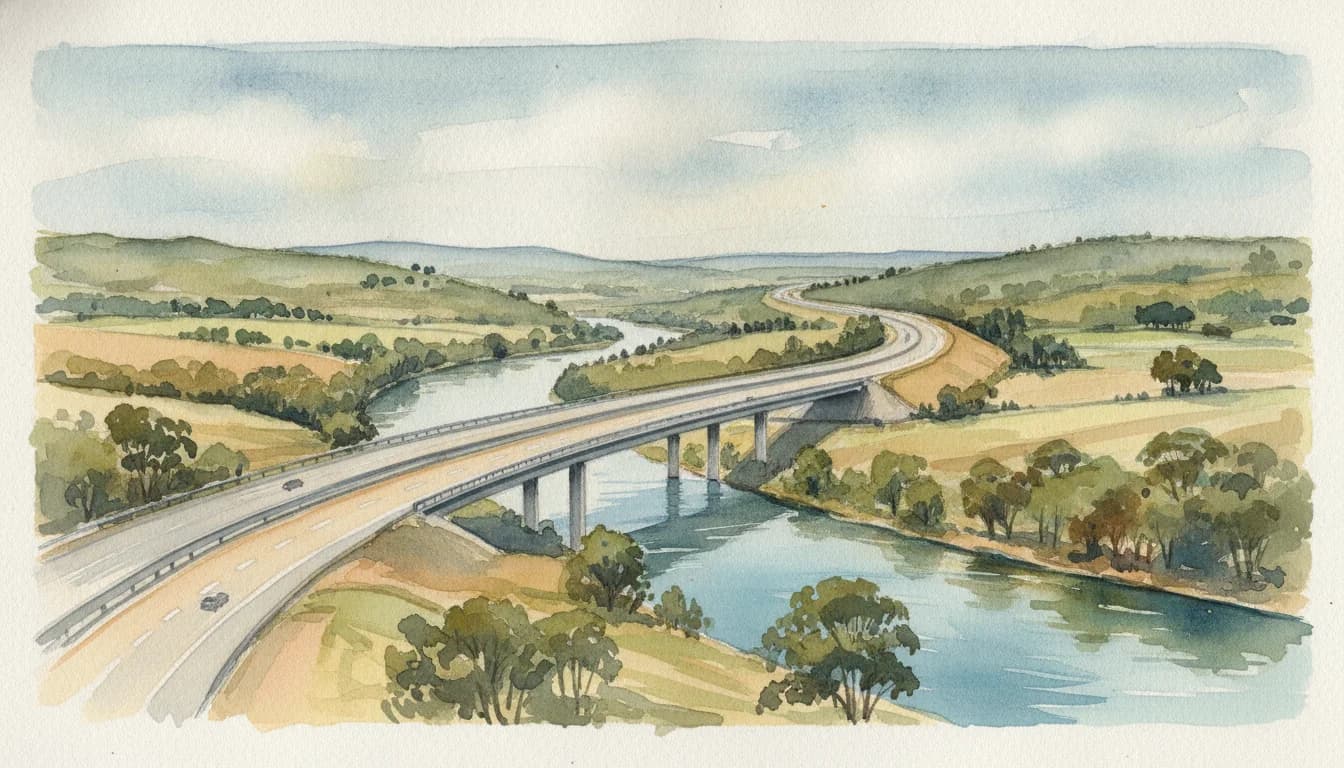
Sydney Newscast reports a landmark update for New South Wales: the M1 Pacific Motorway extension opened to traffic in the Hunter region on September 11, 2026, unlocking a new 15-kilometre motorway connection between Black Hill and Raymond Terrace. The opening marks the culmination of years of planning and construction designed to close a critical missing link on the Sydney–Brisbane freight corridor and to improve regional connectivity for businesses and residents across the North Coast and Greater Sydney region. The event is being watched closely by transport planners, logistics operators, and local communities who depend on faster, more reliable highway connections along one of Australia’s busiest freight routes. According to NSW and Commonwealth information, the project is a joint investment with a total budget of around $2.24 billion, reflecting a coordinated effort between the Albanese and Minns administrations to upgrade the nation’s major arterials. (nsw.gov.au)
The immediate impact is tangible: early data indicate peak-hour travel times on portions of the corridor are expected to drop by about 7 to 9 minutes, and up to 25,000 vehicles per day could be redirected away from local streets, easing congestion in neighbouring communities while delivering a smoother, faster route for freight and passengers alike. This development sits at the intersection of technology-enabled project delivery, advanced corridor planning, and the broader ambition to strengthen the Sydney–Brisbane economic spine through upgraded infrastructure. The opening is also a milestone for the Hunter region, where the new motorway connection directly links to the A1 Pacific Highway at Raymond Terrace, creating a continuous, controlled-access corridor that reduces conflict with local traffic and improves safety for heavy vehicles traversing the route. (infrastructure.gov.au)
What happened next will be watched closely by policymakers and industry observers, as the new highway enters a period of on-going monitoring, maintenance, and adaptive traffic management. The project’s opening aligns with a broader plan to modernize the state’s motorway network and to deliver better connections between regional NSW and the metropolitan hubs of Sydney and Newcastle. For readers following the policy context, this development follows a formal environmental assessment and a staged delivery framework that outlined the 15-kilometre extension and the accompanying network improvements. The official planning process and project milestones are documented in NSW government and planning portals, which provide essential background for understanding the scope of the M1 Pacific Motorway extension to Raymond Terrace. (planningportal.nsw.gov.au)
Opening with the news you can use, here is the latest context from the agencies involved. The M1 Pacific Motorway extension connects at Black Hill and traverses to Raymond Terrace, a route that had long been cited as a missing piece in the region’s freight and commuter network. The opening day also serves as a test case for the sequencing and logistics of large-scale motorway delivery in Australia, including how new bridges and interchanges perform under live traffic conditions. As Transport for NSW and the federal Infrastructure Department have noted, the project incorporates a multi-faceted approach to construction, traffic management, and post-opening monitoring to ensure the corridor meets expected performance benchmarks. For readers who want to see the primary documentation, the following releases provide direct detail on the opening and project scope: the NSW government release detailing the Hunter opening and the Infrastructure.gov.au news release summarizing the national significance and the traffic impacts. Links are provided below under the anchors to primary sources. (nsw.gov.au)
What Happened
Announcement Details
The official event occurred on September 11, 2026, when the NSW Government announced that the M1 Pacific Motorway extension to Raymond Terrace opened to traffic in the early hours of that day. The new 15-kilometre dual carriageway extends the M1 from Black Hill to the Pacific Highway at Raymond Terrace and includes significant upgrades to the surrounding network to support the new alignment. The opening closes a key gap in the Sydney–Brisbane freight corridor, with early indications pointing to improved journey reliability for both commercial and passenger movements along the corridor. The project status and opening details were communicated through multiple government channels, including the NSW Government ministerial release and the federal Department of Infrastructure’s news update. (nsw.gov.au)
In a contemporaneous planning and project-update context, the M1 Pacific Motorway extension to Raymond Terrace is documented as a 15-kilometre extension with a set of accompanying works intended to integrate the new motorway into the existing highway network. The official planning portal outlines the scale of the extension and its role in linking North Coast regions more directly to Sydney via a continuous motorway alignment. Readers seeking the planning and environmental assessment background can consult the NSW Planning Portal entries, which include references to the Environmental Impact Statement prepared for the project and the staged development framework. (planningportal.nsw.gov.au)
Timeline and Milestones
Construction on the M1 Pacific Motorway extension to Raymond Terrace has been described as a multi-year effort, with the project’s scale reflected in the planning and execution timeline. NSW government communications frame the extension as a culmination of long-running planning and substantial construction activity, including the deployment of a sequence of bridges and interchanges along the route. In government parlance, the project represents one of the most significant road infrastructure undertakings in regional NSW in recent years, designed to unlock freight movements and reduce city-bound congestion as a key lever for regional productivity. The official updates also emphasize that the extension is a coordinated investment, with funding and oversight shared between the Commonwealth and NSW governments. (nsw.gov.au)
During the build, the project utilised a joint venture approach (and related procurement mechanisms) to deliver 11 new bridges along the Black Hill–Raymond Terrace alignment, forming the backbone of the extended motorway and enabling a more robust crossing of natural and built environment features. The presence of 11 new bridges is highlighted in project updates and government releases, underscoring the technical scale of the extension and the engineering challenges involved in spanning river systems and transport corridors. These milestones are documented in the agency updates and related project materials. (nsw.gov.au)
Key Facts
- The extension stretches 15 kilometres from Black Hill to the Pacific Highway at Raymond Terrace, delivering a continuous motorway link between Sydney and the North Coast region. This alignment is widely described in official project materials and planning documentation as a critical corridor upgrade. For a concise reference to the project scope, see the Planning Portal entry on the Raymond Terrace extension. (infrastructure.gov.au)
- The total project cost is reported at approximately $2.24 billion, with funding shared between the Commonwealth and NSW governments ($1.792 billion from the Commonwealth and $448 million from NSW). This funding arrangement is reiterated in federal and state communications, including Infrastructure Australia’s assessments and ministerial releases. The funding breakdown is a core element of the project’s public communications and budgetary disclosures. (nsw.gov.au)
- The project includes 11 new bridges along the corridor and multiple interchange upgrades to support the new traffic volumes and to improve safety and reliability for freight and passenger movements. The bridge count and interchange upgrades are cited in official project releases and planning documentation. (nsw.gov.au)
The immediate news item—opening to traffic on September 11, 2026—carries important implications for road users and freight operators. The Hunter region gains a new motorway link that promises reduced local congestion in the short term and a more direct route for long-haul movements between Sydney and the North Coast. The accompanying traffic-management measures and post-opening monitoring will be critical as the road transitions from construction to routine operation, helping to quantify actual travel-time savings and vehicle-diversion effects in the months after opening. (nsw.gov.au)
The Minns Government’s overarching transport agenda emphasizes connectivity and regional growth, and the M1 extension is frequently cited as a tangible example of that policy approach. The government’s own quotes stress that improvements to the M1 are part of a broader plan to upgrade the state’s transport backbone and support freight efficiency. “The Minns Labor Government is committed to improving connectivity across regional NSW, and this upgrade is a prime example of that vision in action,” a ministerial release notes, reflecting the policy context surrounding the project. (nsw.gov.au)
Why It Matters
Regional Connectivity and Economic Link
The M1 Pacific Motorway extension to Raymond Terrace is more than a local highway upgrade; it represents a strategic link in the larger NSW and national transport network. Experts and policymakers have framed the project as a “missing link” in the Sydney–Brisbane corridor, with the extension intended to relieve congestion on local streets while improving freight reliability and access to regional centers. The official communications emphasize that the upgrade helps to connect the North Coast more directly to Sydney, reducing travel times and enhancing the efficiency of freight movements in one of Australia’s busiest corridors. For readers, the implication is clear: the extension is designed to unlock regional economic opportunities by improving road-based connectivity to key markets and supply chains. (infrastructure.gov.au)
“The M1 extension opens a direct, high-capacity link between Sydney and the North Coast, strengthening one of Australia’s core freight corridors,” the Infrastructure Australia evaluation notes, highlighting the strategic importance of the project for national logistics. This framing helps contextualize the extension within broader transport and economic policy priorities. (infrastructureaustralia.gov.au)
Freight and Corridor Efficiency
Freight operators welcomed the reportable improvements associated with the M1 extension, particularly the potential alleviation of bottlenecks and the smoother operation of heavy vehicles along the corridor. Early estimates from government sources indicate substantial travel-time reductions during peak periods, a factor that can translate into lower operating costs and more reliable delivery windows for businesses reliant on Western Sydney–Newcastle supply chains. The federal and state communications stress the role of the extension in moving high-volume freight more efficiently, which has downstream implications for regional employment and business continuity across the corridor. It’s also a data point for long-term transport planning and tolling strategy in the network, given the extension’s position within the broader M1 corridor. (infrastructure.gov.au)
Traffic Flow and Local Streets
One of the expected immediate effects of the M1 Pacific Motorway extension is the diversion of traffic away from local streets around Beresfield, Heatherbrae, Tomago, and Raymond Terrace as motorists begin to use the new motorway alignment. Government releases point to a reduction in local street volumes by up to 25,000 vehicles per day, a figure that signals meaningful changes in local congestion, safety, and noise profiles. This shift can alter daily patterns for residents and local businesses, and it places added emphasis on ongoing local road network optimization to accommodate changing traffic flows. The planning and release material explicitly connect these traffic shifts to the configuration of the new motorway and the improved interchanges along the route. (infrastructure.gov.au)
The project’s approach to data and planning—linking design choices to traffic outcomes and local impact—offers a useful blueprint for other major highway projects. Analysts note that the M1 extension was modeled and staged to minimize disruption during construction while maximizing the road’s performance once opened. The joint funding and the staged approach to delivery reflect a governance model aimed at aligning engineering outcomes with economic and social benefits for the region. For observers, this is a case study in how to align large-scale infrastructure with regional growth objectives while maintaining a clear focus on safety, reliability, and transit performance. (nsw.gov.au)
Broader Context and Public Sentiment
In public discussions around large motorway extensions, questions often arise about tolling, maintenance funding, and the balance between regional growth and environmental considerations. The M1 extension is positioned within a broader NSW and Commonwealth framework that emphasizes upgrading major road corridors to support growth in regional economies while preserving safety and environmental standards. The official materials emphasize that the project is part of a long-term plan to improve connectivity and freight efficiency, with ongoing monitoring and maintenance commitments to ensure the corridor delivers the anticipated benefits over the coming years. Readers who track transport policy can compare this project with other major road upgrades to gauge how state and national priorities converge in practice. (infrastructure.gov.au)
“The extension is a prime example of the vision in action,” the ministerial release notes. This quotation underscores the political framing of the project as a catalyst for regional progress and resilience in the transport network, which is relevant to readers who want to understand the policy signals behind project commitments. (nsw.gov.au)
What's Next
Final Stages and Opening Milestones
With the opening, attention shifts to the final stages of construction and the transition to steady-state operations. The government communications indicate that after the opening, contractors will remain on site to monitor traffic performance, undertake landscaping establishment, and conduct targeted maintenance as required. In the southern section, monitoring and maintenance obligations are planned for up to two years, while the northern section will see a one-year period of post-opening oversight. These timelines are typical for large motorway projects after opening and are designed to capture early real-world performance data and adjust maintenance planning accordingly. (nsw.gov.au)
Monitoring, Maintenance, and Data Collection
The post-opening phase is a critical window for validating the project’s performance against the original design intent. Transport agencies typically collect data on traffic volumes, travel times, incident rates, and pavement condition to refine operations and inform future maintenance and upgrade decisions. The M1 Pacific Motorway extension to Raymond Terrace has been subject to this standard post-construction monitoring approach, with authorities emphasizing that traffic conditions, safety metrics, and user experiences will be tracked to determine whether additional improvements or sequencing changes are warranted in the coming years. For readers who want to explore the governance and monitoring framework, planning portal documentation and Transport for NSW project updates provide relevant references. (infrastructure.gov.au)
What to Watch For
- Traffic-performance data: Expect periodic updates on actual peak-hour travel-time reductions and real-world vehicle-diversion patterns beyond the initial projections. The government’s post-opening reporting is designed to capture these dynamics and inform ongoing network optimization.
- Freight-sector response: The extension is positioned as a freight corridor improvement, so logistics operators will be watching for reliability gains, fuel-use implications, and potential tolling considerations as traffic patterns evolve.
- Local-street effects: With thousands of vehicles diverted off local streets, municipalities will monitor changes in neighborhood traffic conditions, pedestrian safety, and local infrastructure load, potentially prompting adjustments to signal timing and road treatments.
- Maintenance and lifecycle planning: The two-year and one-year monitoring windows imply that capital maintenance planning, resurfacing schedules, and asset-management decisions will be revisited as data accumulate.
The broader policy context remains critical for interpreting these next steps. As federal and state agencies balance infrastructure investment with budgetary constraints, the M1 extension to Raymond Terrace stands as a data-rich case study of how large road projects are delivered, evaluated, and integrated into a regional growth strategy. Readers with interest in the policy implications of major road upgrades should follow ongoing updates from the NSW Government’s motorways portal and the federal Infrastructure Australia assessments for the corridor. (infrastructure.gov.au)
Closing
The M1 Pacific Motorway extension to Raymond Terrace represents a landmark upgrade for NSW, delivering a 15-kilometre, high-capacity link that closes a critical missing connection in the Sydney–Brisbane freight corridor. The opening on September 11, 2026, was accompanied by clear expectations of reduced peak travel times, lower congestion on surrounding streets, and meaningful improvements to regional mobility. Early data indicate the route is already shaping traffic patterns in the Hunter region and along the corridor, with the potential to boost regional productivity by providing a more reliable route for goods and people. As monitoring continues and post-opening milestones unfold, Sydney Newscast will continue to report on the project’s realized benefits, its maintenance challenges, and the broader economic implications for the NSW economy.
For readers seeking ongoing updates, primary sources from NSW and the Commonwealth governments remain the most authoritative references. The NSW Planning Portal and the Infrastructure Australia updates offer detailed project descriptions, while the NSW Government releases provide real-time progress notes and milestone announcements as the extension integrates into daily traffic and freight operations. As the corridor stabilizes, analysts will assess whether the projections around travel-time savings and traffic diversion hold under everyday conditions, and how the extended M1 corridor influences regional development, supply chains, and the broader transport strategy for eastern Australia. (planningportal.nsw.gov.au)
Notes for readers: The M1 Pacific Motorway extension is a dynamic project with ongoing updates. This article synthesizes official data and primary releases to present a balanced, data-driven view of the extension’s opening, its immediate effects, and the anticipated next steps in its lifecycle.
About the author
Mia Calloway
Mia Calloway is a senior correspondent at Sydney Newscast, reporting on business, property, and the NSW economy.