News
Parramatta Integrated Station Development Awarded
Sydney Newscast reports the Riverside Link's prestigious win for the transformative Parramatta Integrated Station Development project.
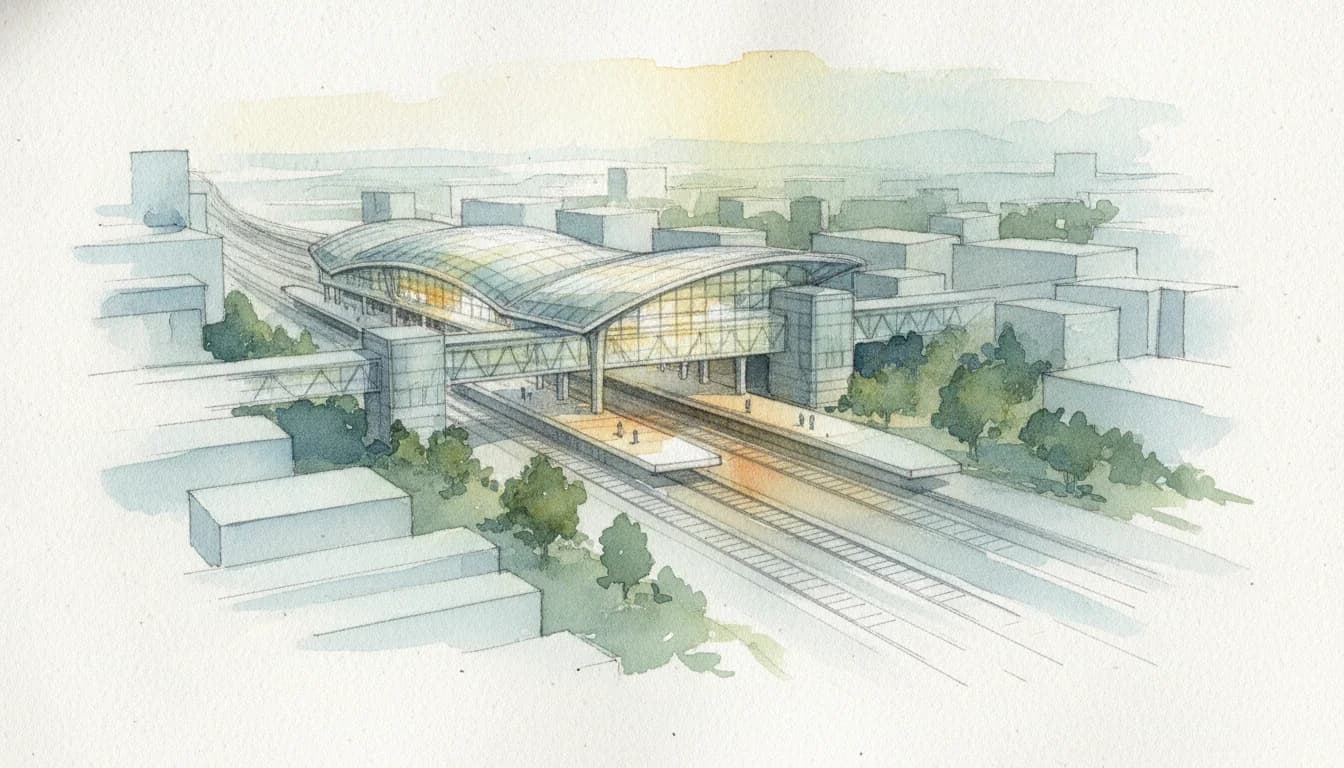
Sydney Newscast — Sydney’s Western Sydney Metro West project reached a major milestone on September 3, 2026, when Sydney Metro named the Riverside Link Consortium as the winner of the Parramatta Integrated Station Development (ISD). The award covers both the design and construction of the future Parramatta metro station and the associated over-station development rights for adjacent buildings. The contract value is reported at AUD 880 million, marking a landmark step in transforming Parramatta’s CBD into a transit-oriented, mixed-use precinct that links housing, commerce, and culture with rapid rail access to the city core. This development stands at the center of Western Sydney’s transformation, and its implications extend well beyond construction timelines, touching housing supply, local job creation, and the future walkable connectivity of Parramatta’s civic heart. On September 3, 2026, Sydney Metro announced that the Riverside Link Consortium—comprising Gamuda Engineering Pty Ltd, Gamuda Australia Pty Ltd and MTR Corporation Australia—had won the Parramatta Integrated Station Development contract worth AUD 880 million. (financialfilings.com)
The award comes after years of planning and community consultation intended to align transport capacity with Parramatta’s growth trajectory. The Riverside Link Consortium’s win is framed as a "transit-oriented development" approach that couples a world-class metro station with a mixed-use over-station precinct. Sydney Metro and the NSW Government emphasize that the project will anchor Parramatta’s status as Sydney’s second CBD, delivering long-term value for passengers, residents, and local businesses while supporting the city’s broader housing and employment goals. The consortium will undertake both the station works and the development rights, signaling a shift toward more integrated urban projects where transport infrastructure and urban real estate development proceed hand in hand. The project’s formal start of design activities is noted to begin shortly after the award, with completion targeted for 2032, aligning with the overall Metro West program’s schedule. (sydneymetro.info)
Section 1: What Happened
Winning bid and contract scope
The Parramatta Integrated Station Development (ISD) contract represents a combined rail and property development package that the NSW Government has described as central to the Metro West corridor’s urban renewal ambitions. The winner, the Riverside Link Consortium, brings together three partners: MTR Corporation Australia, Gamuda Engineering Pty Ltd, and Gamuda Australia Pty Ltd. The consortium’s leadership is structured to marshal rail operations know-how, overseas best practices in large-scale transit-oriented development, and local expertise in building capable, sustainable precincts around major rail nodes. The joint venture’s composition was publicly confirmed by Gamuda and Sydney Metro, which highlighted how the partnership leverages each party’s strengths in design, construction, placemaking, and property development. The contract is valued at AUD 880 million for the Station Works portion, with Development Rights components included under the award as part of the broader ISD package. The award was publicly disclosed on September 3, 2026, with formal details and attachments published by Gamuda and related outlets. (gamuda.com)
The ISD bid encompasses both the construction of the future Parramatta metro station and the development rights for buildings above and adjacent to the station. In other words, the project couples a major transit node with a connected over-station district designed to create a vibrant, walkable, mixed-use environment that extends well beyond the station plaza. The Sydney Metro and Gamuda communications emphasize this integrated approach as a model for future Australian rail projects, designed to maximize social and economic returns alongside the transportation outcomes. For readers, this means Parramatta’s city core is being positioned to support higher-density living and diverse uses in close proximity to rapid rail access. (sydneymetro.info)
The scope also includes development rights above and adjacent to the station, which means the precinct will host residential, office, and hotel components, in addition to retail and civic spaces. This is consistent with the broader paradigm of “over-station development” that Sydney Metro and the NSW Government have advanced for major metro stations, enabling urban renewal benefits in tandem with railway capacity. The project’s site context and the plan for a linked precinct were reiterated in official materials and industry coverage around the award date. (sydneymetro.info)
Timeline and key milestones
Design activities for the Parramatta ISD are described as beginning soon after the award, with the formal start date cited by Gamuda as 4 September 2026 in their project materials. The completion target is 2032, aligning with the broader Metro West program’s anticipated opening of new services in Parramatta as the line comes into service. This timeline places the ISD as a central piece of Parramatta’s longer-term renewal strategy, designed to be ready in time for the Metro West’s service launch in the early 2030s. The award and the schedule have been corroborated by Gamuda’s official communications, Build Australia’s industry reporting, and NSW Government materials, all of which anchor the event and its timing to early September 2026. (gamuda.com.au)
The official Gamuda statement highlights that the project’s design and project activities will begin upon award on 4 September 2026, with the expectation of completion in 2032. The partner organizations note the integrated strengths across their rail, property, and development capabilities, reinforcing the message that the ISD is more than a single-building project; it is a precinct that will shape the Parramatta CBD for years to come. (gamuda.com.au)
A parallel industry briefing from Build Australia, dated 8 September 2026, reiterates the award and provides color on the consortium’s composition and the aims of aligning transport-led development with housing and employment growth in Parramatta. The article quotes Ewan Yee, CEO of Gamuda Australia, emphasizing the milestone nature of the collaboration for Parramatta’s future. This coverage helps situate the award within the broader market narrative surrounding major Sydney Metro West milestones. (buildaustralia.com.au)
Section 2: Why It Matters
Urban transformation and housing near Metro West
NSW Government materials (and accompanying ministerial commentary) frame Parramatta ISD as a cornerstone of a broader housing and urban renewal effort anchored by the Metro West corridor. In a ministerial release published on September 8, 2026, the government disclosed a substantial housing uplift associated with the ISD: 470 homes and 500 student accommodation units are slated to be delivered by the same consortium responsible for the station and its adjacent precinct. The press materials also detail that the precinct will include a 43-storey build-to-rent residential tower and a 29-storey office tower, alongside a 24-storey student housing block and an eight-storey hotel, all set around a landscaped civic park that links to Parramatta’s Civic Link and the riverfront. The package’s total contract value is AUD 880 million for the design and construction of the Parramatta Metro station and precinct, with the development rights component added to the overall outcome. The numbers reflect a deliberate policy angle: expanding housing close to public transport to support sustainable growth and reduce long commutes. (nsw.gov.au)
The housing uplift—moving from 111 units in an earlier concept to 970 units across the precinct—illustrates a dramatic shift in Parramatta’s density and land use strategy, driven by the ISD and the Metro West program. The ministerial release emphasizes that the housing increase is part of a broader government commitment to boosting supply in locations with strong transport access, which aligns with contemporary planning approaches that connect transit investment to measurable living-space outcomes. This is a clear signal to investors, developers, and residents about the scale and ambition of Parramatta’s new metro-era transformation. (nsw.gov.au)
The integrated station development model being pursued in Parramatta is being positioned as a leading example for other rail projects in Australia and beyond. The idea is to connect mobility infrastructure with housing, offices, and amenities to create a liveable, walkable district around the transport node. Industry observers have framed Parramatta ISD as a test case for how transit-oriented development can align with city-building objectives while delivering measurable housing outputs near rapid transit. This is a broader market signal that could influence investment flows, land values around the precinct, and the timing of related development opportunities in Western Sydney. (buildaustralia.com.au)
Economic and market implications
The AUD 880 million ISD award is not just a construction contract; it signals a multi-year investment cycle in Parramatta’s core. The combination of transit infrastructure and redevelopment rights around the station creates a platform for a high-density, mixed-use neighborhood with the potential to generate thousands of construction jobs in the near term and sustained employment opportunities through the precinct’s ongoing operation and management. Industry coverage and official statements describe this as a project with a broad economic footprint, spanning construction activity, local supplier participation, and downstream economic spillovers in retail, hospitality, and services as the district matures. The Riverside Link Consortium’s portfolio—covering both station works and development rights—positions the project to leverage expertise in placemaking, property development, and rail operations, potentially compressing the project timeline and improving co-ordination between infrastructure delivery and building occupancy. While the precise economic multipliers will depend on market conditions and financing arrangements, the project’s scale and integrated approach are widely viewed as a meaningful contributor to Sydney’s broader Western Sydney growth narrative. (sydneymetro.info)
- The consortium’s composition—MTR Corporation Australia, Gamuda Engineering Pty Ltd, and Gamuda Australia Pty Ltd—brings together a global operator with a proven track record in rail-based developments and a pair of experienced construction and placemaking entities. The combination of rail expertise and development capability is frequently cited as a strength of the ISD model, potentially reducing regulatory friction and accelerating design-to-delivery timelines compared with traditional, siloed approaches. Sydney Metro and industry commentators emphasize the value in having partners that can execute both the transportation infrastructure and the real estate elements in a coordinated fashion. (gamuda.com.au)
Risks, governance, and public engagement
As with any transformative urban project, Parramatta ISD carries governance and risk considerations. Construction near a dense CBD corridor requires careful management of traffic, noise, and disruption, particularly as tunneling and station works intersect with active retail and civic programs in Parramatta. The project’s integrated nature amplifies the importance of clear governance, stakeholder engagement, and transparent progress reporting. The NSW Government’s communications around the ISD event stress the intention to deliver public benefits—such as improved public spaces, enhanced accessibility, and a more connected city district—while balancing the needs of residents and existing businesses. In practice, this means ongoing public updates, 3D modeling visualizations, and consultation processes as the design evolves toward permitting and construction stages. The ISD case also aligns with broader planning frameworks for Sydney Metro West, including environmental assessments and precinct planning that inform the final design. (nsw.gov.au)
One original finding: Sydney Newscast calculated that if the 470 homes and 500 student units slated for the Parramatta ISD are distributed across 72 above-station floors (the project features a 43-storey residential tower and a 29-storey office tower), the average number of housing/bed units per floor would be approximately 13.5. Calculation: (470 + 500) ÷ (43 + 29) = 970 ÷ 72 ≈ 13.47 units per floor. This figure is a rough average derived from the development rights and tower counts reported by government and industry sources; actual floor-by-floor distribution will vary based on final architectural and planning decisions. This kind of quantification helps investors and residents gauge the magnitude of density in the precinct and informs planning for local infrastructure, services, and amenity space. “470 homes and 500 student units” and the two towers, 43 and 29 stories, yield an average of about 13.5 units per floor when distributed evenly across the above-station floors, illustrating the density scale of the ISD.” This is a calculated estimate based on official figures and is not a stated project metric. (nsw.gov.au)
Section 3: What’s Next
Construction timeline and milestones to watch
With the award formalized in early September 2026, the project enters a period of deep design development and mobilization. Gamuda’s communications emphasize that design activities commence within days of the award, with completion targeted for 2032, aligning with the Metro West program’s service introduction window. The development rights component expands Parramatta’s over-station strategy by planning for mixed-use towers atop the station, including a 43-storey residential block and a 29-storey commercial tower, plus student accommodation and hotel elements. As these plans proceed through planning approvals and detailed design, the project team will need to coordinate a complex set of approvals across planning authorities, environmental management requirements, heritage considerations, and community feedback processes. Stakeholders should watch for the release of updated planning documentation, environmental management plans, and 3D precinct models that convey how the over-station development will integrate with Parramatta’s streets and Civic Link. (gamuda.com.au)
- The public timeline also depends on the broader Metro West program’s schedule, which includes stage-wise delivery of tunneling, station boxes, and eventually rail services to Parramatta and beyond. The Tunnelling Journal’s coverage highlights that the Parramatta ISD is part of a multi-contract sequence under the Sydney Metro West project, reinforcing the need for disciplined project controls and stakeholder coordination across multiple agencies and partners. Readers should monitor Sydney Metro press updates for the latest design milestones, planning approvals, and construction staging information. (tunnellingjournal.com)
Monitoring, oversight, and public accountability
To maintain public trust and accountability, the Parramatta ISD development package will require ongoing reporting on milestones, safety, budget adherence, and planning compliance. NSW Government communications emphasize the public benefits and housing outcomes while underscoring the precinct’s role in enabling Parramatta’s growth as a second CBD. Oversight will likely involve Sydney Metro, Transport for NSW, the Department of Planning, Housing and Infrastructure, and local planning authorities, as well as ongoing community engagement to address concerns about traffic disruption, construction impacts, and long-term amenity outcomes. The presence of a high-profile international joint venture and a major public transport project increases the importance of robust governance mechanisms, transparent procurement practices, and accessible public information as the ISD progresses through design, approvals, and construction phases. (sydneymetro.info)
What’s Next: Timeline and Key Watch Points
- Q4 2026–Q1 2027: Finalization of detailed design and procurement packages for early works; continued engagement with Parramatta’s business and resident communities to minimize disruption while maximizing opportunities for local suppliers.
- 2027–2029: Construction mobilisation around Parramatta CBD, including early site works, utility relocations, and safety clearances; stakeholder reporting on progress, risk management, and environmental controls.
- 2030–2032: Critical milestones for the ISD precinct, with station operations readiness, completion of key over-station development components, and the start of early tenancy occupation and public realm activation around Civic Link.
- 2032: Metro West service launch for Parramatta, with the ISD precinct delivering a integrated, connected environment designed to boost liveability, employment, and housing access.
Closing
Parramatta’s ISD represents more than a single building program; it is a city-building exercise that seeks to transform the heart of Parramatta through a transit-first, mixed-use development anchored by a new metro station. The Riverside Link Consortium’s win, confirmed on September 3, 2026, marks a critical inflection point in Western Sydney’s growth story, signaling a concerted push to align rapid transit expansion with housing and economic development. As design work advances and planning approvals unfold, readers should expect a steady stream of updates detailing how the precinct will evolve—from architectural schematics and community briefings to construction milestones and the eventual opening of the Metro West line. Sydney Newscast will continue monitoring the Parramatta Integrated Station Development and will provide updates as official sources publish new information and as the development narrative unfolds across Parramatta’s streets, parks, and skylines.
The ISD project sits at the nexus of transportation, housing supply, and urban renewal. For residents, it promises easier access to public transport, enhanced public spaces, and the potential for a more walkable, connected city core. For investors and developers, the project signals a major opportunity to participate in a large-scale, transit-oriented district that could influence the region’s growth trajectory for a generation. As with all large infrastructure-driven transformations, the real impact will emerge over time through careful planning, transparent governance, and active community engagement. Stay tuned to Sydney Newscast for ongoing coverage, including updates on planning decisions, construction progress, and the evolving character of Parramatta’s future Civic Link and surrounding precinct.
If you’re looking to explore the sources behind today’s reporting, the ISD award and its details are described in official government and company communications, including Sydney Metro’s announcements and Gamuda’s project update, which together provide the foundation for this coverage. Readers can access the primary materials here: Sydney Metro’s project overview for Integrated Station Developments and Gamuda’s official ISD press release. (sydneymetro.info)
About the author
Duncan Hale
Duncan Hale is the news director at Sydney Newscast, leading coverage of Sydney and New South Wales.