News
Western Harbour Tunnel TBM Begins Excavation
Sydney Newscast reports the Western Harbour Tunnel milestone as TBMs begin excavation under Sydney Harbour, with timelines, impacts, and next steps.
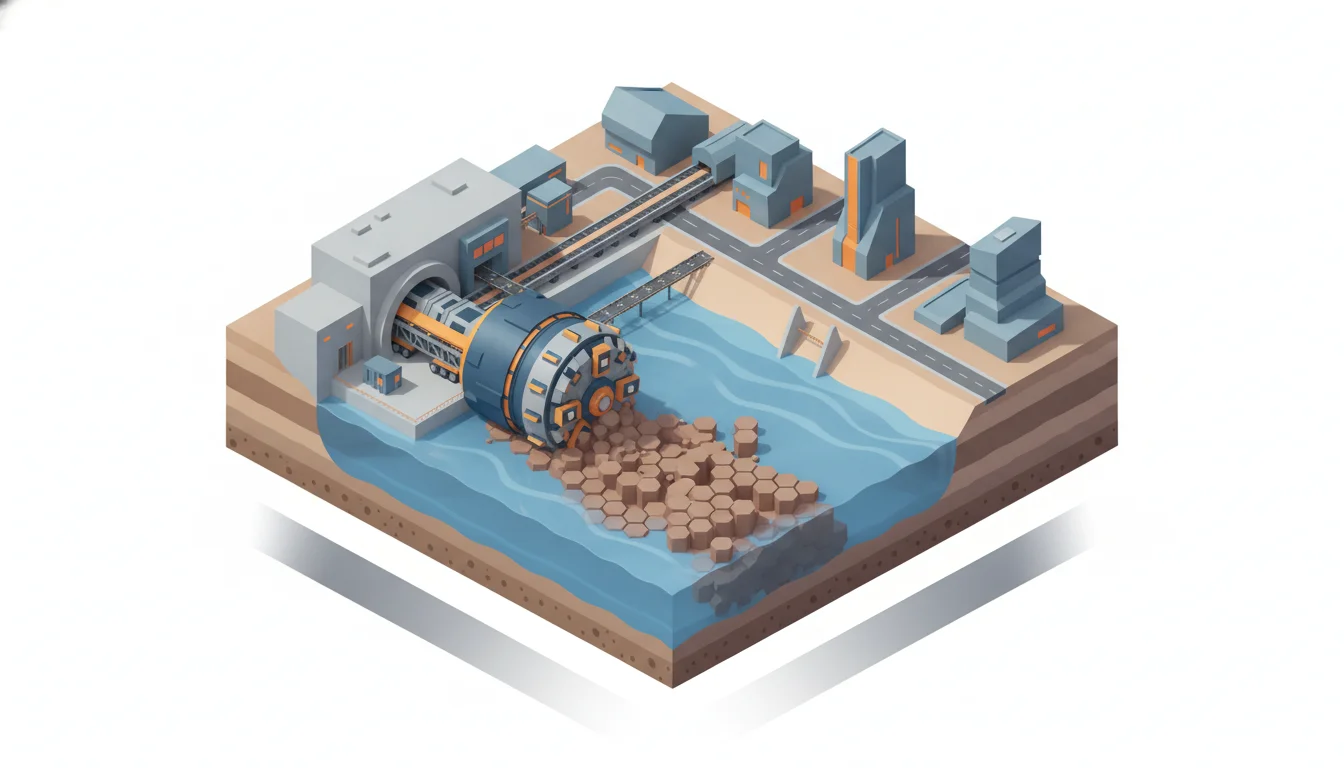
Patyegarang began carving beneath Sydney Harbour at 44.7 metres below Birchgrove Oval on June 12, 2026, marking the start of the final 1.5-kilometre harbour segment of the 6.5-kilometre Western Harbour Tunnel, ACCIONA reported on the project’s public updates. This milestone, observed from Birchgrove to Waverton, signals the transition from major surface and shaft works to underwater tunneling and tunnel fit-out phases for Sydney’s next harbour crossing. The Western Harbour Tunnel project remains on track for its planned 2028 opening and is designed to remain in public ownership. (acciona.com.au)
Sydney Newscast — independent coverage from Sydney, Australia — has been tracking the Western Harbour Tunnel as it progresses through its final construction phase. With two mega TBMs, Patyegarang and Barangaroo, now in the harbour zone, engineers are transitioning from excavation to tunnel lining and system integration. The project’s stated goal is a 6.5-kilometre twin-tube crossing that will connect the Warringah Freeway corridor to Rozelle Interchange, while reducing congestion and travel times across a broad swath of Sydney’s north and inner west. In the immediate aftermath of the harbour drive start, government and project pages emphasize the milestone’s significance for the city’s broader transport strategy and its public ownership mandate. (acciona.com.au)
Section 1 — What Happened
Patyegarang’s Harbour Drive
The milestone moment
Patyegarang, one of the two tunnel boring machines (TBMs) assigned to the Western Harbour Tunnel project, began carving its way beneath Sydney Harbour on June 12, 2026. The machine reportedly operated from a depth of 44.7 metres below Birchgrove Oval, initiating the final stage of excavation for the harbour segment of the project. The start of this harbour drive marks a critical progression from above-ground and surface works toward the submerged portion of the 6.5-kilometre route. According to ACCIONA’s official project update, this harbour drive covers the final 1.5 kilometres of tunnel along the harbour's seabed, with Barangaroo following in a parallel schedule to complete the harbour leg. This milestone is part of a broader plan to deliver the crossing in public ownership and to integrate the TBMs with the project’s underground slurry handling and precast segment lining systems. (acciona.com.au)
The engineering context
The Western Harbour Tunnel project is designed as a twin-bore motorway link, with each bore running multiple lanes and sharing a common tunnel alignment beneath Sydney Harbour. The TBMs, each roughly 15.7 metres in diameter and weighing about 4,350 tonnes, are designed to advance under pressures and soils that pose complex geotechnical challenges. As they excavate, the TBMs will install segments to line the tunnel, a process supported by an underground slurry treatment plant capable of handling substantial throughput. The harbour-drive phase represents a transition from pre-tunnelling and launch-chamber construction into continuous underwater boring, a milestone many infrastructure projects consider pivotal for subsequent fit-out and commissioning. ACCIONA’s release highlights the TBMs’ scale and the concrete-segment lining plan, underscoring both the technical sophistication and the logistical coordination required to complete this harbour crossing. (acciona.com.au)
A broader timeline context
The harbour segment is one portion of the overall 6.5-kilometre Western Harbour Tunnel, which will connect the Rozelle Interchange area with the Warringah Freeway corridor through a new harbour crossing. The overall project timeline continues to emphasize a 2028 opening target, with ongoing work on related site preparations, launch chambers, and ancillary works that support the final tunnel drive. Government updates and industry briefings reiterated this timeline, even as the harbour-bore phase moves into its final stage. (nsw.gov.au)
Barangaroo’s Harbour Start and Harbour-Wide Progress
The second TBM’s harbour entry
Barangaroo, Patyegarang’s sister TBM, is advancing toward its harbour-drive responsibilities in parallel. After Patyegarang’s harbour entry, Barangaroo is expected to begin its own push toward the harbour’s final sections in the coming weeks, moving the project closer to complete tunnel crossovers and the eventual connection to Rozelle Interchange. This parallel operation is a deliberate design choice to accelerate the harbour crossing’s final stage and to balance the workload across both machines. The NSW Government and ACCIONA briefings have highlighted Barangaroo’s status as a major milestone within the harbour segment, with assembly and readiness progress nearing completion and harbour excavation scheduled to follow Patyegarang’s drive. (acciona.com.au)
The structural and logistical context
Harbour-level TBM operations require precise sequencing: TBMs are assembled in underground launch chambers, launched into the harbour section beneath Birchgrove, and then advance along a pre-determined path toward Cammeray and Waverton. The Western Harbour Tunnel project also involves significant fit-out work, including the installation of tunnel linings, ventilation, electrical systems, and road connections to Rozelle Interchange and the Warringah Freeway. The combination of TBM drive, tunnel lining, and ancillary works aligns with the project’s published milestones and reinforces the broader objective of delivering a durable, high-capacity harbour crossing that improves regional mobility. (acciona.com.au)
What the Harbour Milestone Means for the Western Harbour Tunnel
Project scale and duration
The Western Harbour Tunnel is a major cross-city infrastructure initiative designed to relieve congestion, shorten travel times, and improve north–south connectivity. The harbour section’s harbour-bore drive is a defining feature of the project’s late-stage construction, signaling a shift from surface construction to underground operations. The six-and-a-half-kilometre length of the project and the anticipated 2028 opening date frame a long-duration construction campaign that engages thousands of workers and a complex supply chain that includes precast concrete segments, TBM components, and support infrastructure. The milestone underscores the human and technical capital invested in Sydney’s newest harbour crossing, which is planned to operate under public ownership and provide ongoing transportation benefits for decades. (nsw.gov.au)
Economic and mobility implications
Beyond the engineering specifics, the Western Harbour Tunnel project carries broader implications for Sydney’s mobility and economy. Government briefings emphasize that the harbour crossing is intended to deliver travel-time reductions, reduce pressure on the Harbour Bridge and Western Distributor, and improve overall network efficiency. In addition to direct construction employment, the project’s lifecycle is expected to support thousands of jobs across the supply chain and related sectors. While precise numbers vary by update and methodology, the government has highlighted substantial employment and throughput benefits during construction, alongside ongoing operational efficiencies once the tunnel opens. (nsw.gov.au)
Section 2 — Why It Matters
Why This Milestone matters for Sydney and beyond
Traffic relief and travel-time improvements
The harbour crossing is designed to reduce congestion by diverting through-traffic away from heavily used corridors and by providing a more direct connection between the Warringah Freeway and the Rozelle Interchange. Government communications point to significant travel-time savings once the Western Harbour Tunnel is fully operational, with broader network improvements anticipated as drivers shift away from congested routes. The project is also described as remaining in public ownership, aligning with policy goals for long-term asset stewardship and public accountability in major infrastructure. (nsw.gov.au)
Public ownership and governance
One of the project’s central governance tenets is that the Western Harbour Tunnel will remain in public ownership. This is emphasized in multiple government briefings and milestone announcements, reinforcing a strategic objective to retain long-term control over tolling, maintenance, and future upgrades. Public ownership is framed as a safeguard for consumer interests and for ensuring transparent asset management over the project’s lifecycle. (nsw.gov.au)
Jobs, industry, and regional impact
The Western Harbour Tunnel initiative is positioned as a major employer during construction, with thousands of workers contributing to the project across design, procurement, and on-site execution. Briefer estimates and progress updates discuss the broader economic footprint of the harbour-tunnel build, including local manufacturing of tunnel components, job retention within the regional construction ecosystem, and measurable contributions to the state’s infrastructure pipeline. The project’s public communications have highlighted the scale of the workforce involved and the domestic manufacturing aspects of the TBMs and supporting systems. (nsw.gov.au)
Who Is Affected and How
Local communities and businesses
Residents near Birchgrove, Rozelle, and North Sydney are likely to experience near-term disruptions associated with heavy construction activity, traffic diversions, and temporary access adjustments. In the longer term, improved traffic flows and reduced bottlenecks should lessen local congestion and shorten peak travel times for daily commuters, delivery fleets, and regional travelers. The government’s engagement materials and community updates outline ongoing consultation and mitigation strategies intended to minimize inconvenience and maximize the harbour crossing’s benefits for local communities. (nsw.gov.au)
Transport networks and regional mobility
The Western Harbour Tunnel interfaces with the Rozelle Interchange and the broader urban motorway network, including connections to the M4 and M8 via the WestConnex corridor. The harbour crossing’s successful completion will shape traffic patterns across Sydney’s inner-west, north shore, and central business district, influencing route choices for motorists and potentially shifting demand across multiple corridors. Transport planners emphasize that the harbour tunnel will complement existing infrastructure by providing an alternative harbour crossing and by redistributing traffic loads more evenly across the network. (nsw.gov.au)
What It Means for Policy, Infrastructure, and Technology
Technological milestones and procurement
The Western Harbour Tunnel project has advanced through significant technological milestones, including the use of large-diameter TBMs and integrated tunnel-support systems. The TBMs themselves represent a standout achievement in underwater tunnelling, with the two machines being among the largest in the southern hemisphere. The public-facing disclosures highlight that the TBMs are designed to minimize surface disruption and to enable efficient tunnel lining and stabilization as they progress. These technological milestones underscore the project’s leadership in large-scale underground construction and provide a reference point for similar megaprojects in other cities. (acciona.com.au)
Lessons for other megaprojects
As one of Australia’s most significant road infrastructure undertakings in recent years, the Western Harbour Tunnel offers a case study in balancing complexity, public ownership, and long-term mobility outcomes. Observers note that the Harbour Tunnel’s governance structure, tendering approach, and alignment with broader transport objectives provide a model for coordinating multi-site construction, coordinating with adjacent upgrades, and communicating progress to the public in a transparent manner. The combination of TBM-led harbour crossing work with surface improvements illustrates how modern megaprojects can manage risk while delivering measurable improvements to urban transport. (nsw.gov.au)
Section 3 — What’s Next
What’s Next for the Western Harbour Tunnel
Short-term milestones (late-2026)
- Barangaroo is expected to begin its harbour-drive phase in the near term following Patyegarang’s harbour entry, moving toward the harbour’s final sections. This parallel activity aims to complete the harbour crossing’s through-harbour drive more quickly and enable continued tunnel lining and fit-out activities in the ensuing months. The specific timing is oriented around a multi-month sequence of assembly, testing, and initiation of tunnelling under the harbour, with public briefings stating that harbour driving would begin within weeks after Patyegarang’s entry. (acciona.com.au)
- The Harbour Tunnel’s final harbour segment, comprising the last 1.5 kilometres of underwater tunnelling, is expected to progress toward completion, with tunnel lining, system integration, and surface-road connections advancing in tandem. Public sources emphasize the ongoing coordination between TBM operations, ventilation, electrical, and drainage systems, all essential for safe post-tunnelling commissioning. (acciona.com.au)
Medium-term milestones (late-2026 to 2027)
- TBM operations progress toward complete harbour crossing excavation, with both Patyegarang and Barangaroo contributing to the final cross-harbour drive. As these operations advance, attention will transition to tunnel fit-out, connection to Rozelle Interchange, and integration with the Warringah Freeway network. The harbour-drive completion is a keystone step before the project moves into testing, commissioning, and eventually handover for public use. (nsw.gov.au)
Long-term milestones (2028 and beyond)
- Open to traffic in 2028: The Western Harbour Tunnel is slated to open to motorists in 2028, delivering a direct link between the Warringah Freeway corridor and Rozelle Interchange. The public updates reiterate the 2028 timeline and highlight that the project will remain in public ownership, reinforcing the long-term management and governance framework for this major asset. This timeline is consistently cited across NSW Government communications and project disclosures. (nsw.gov.au)
Closing
The Western Harbour Tunnel milestone — Patyegarang’s harbour-drive inception — marks a pivotal moment for Sydney’s mobility strategy. With Barangaroo advancing toward harbour-tunnelling duties, the project remains on track for a 2028 opening and a long-term public ownership model that aims to deliver reliable travel-time savings and improved network resilience. As the harbour crossing moves from excavation to lining, fit-out, and commissioning, Sydney’s transport landscape is entering a new era of underground infrastructure and urban connectivity. Readers can stay updated through Transport for NSW and NSW Government channels, which provide ongoing project progress, road-closure notices, and future milestone announcements as the harbour crossing’s final stages unfold. (acciona.com.au)
About the author
Mia Calloway
Mia Calloway is a senior correspondent at Sydney Newscast, reporting on business, property, and the NSW economy.